Yellowstone Photography Guide: Best Locations and Times of Day for Breathtaking Shots
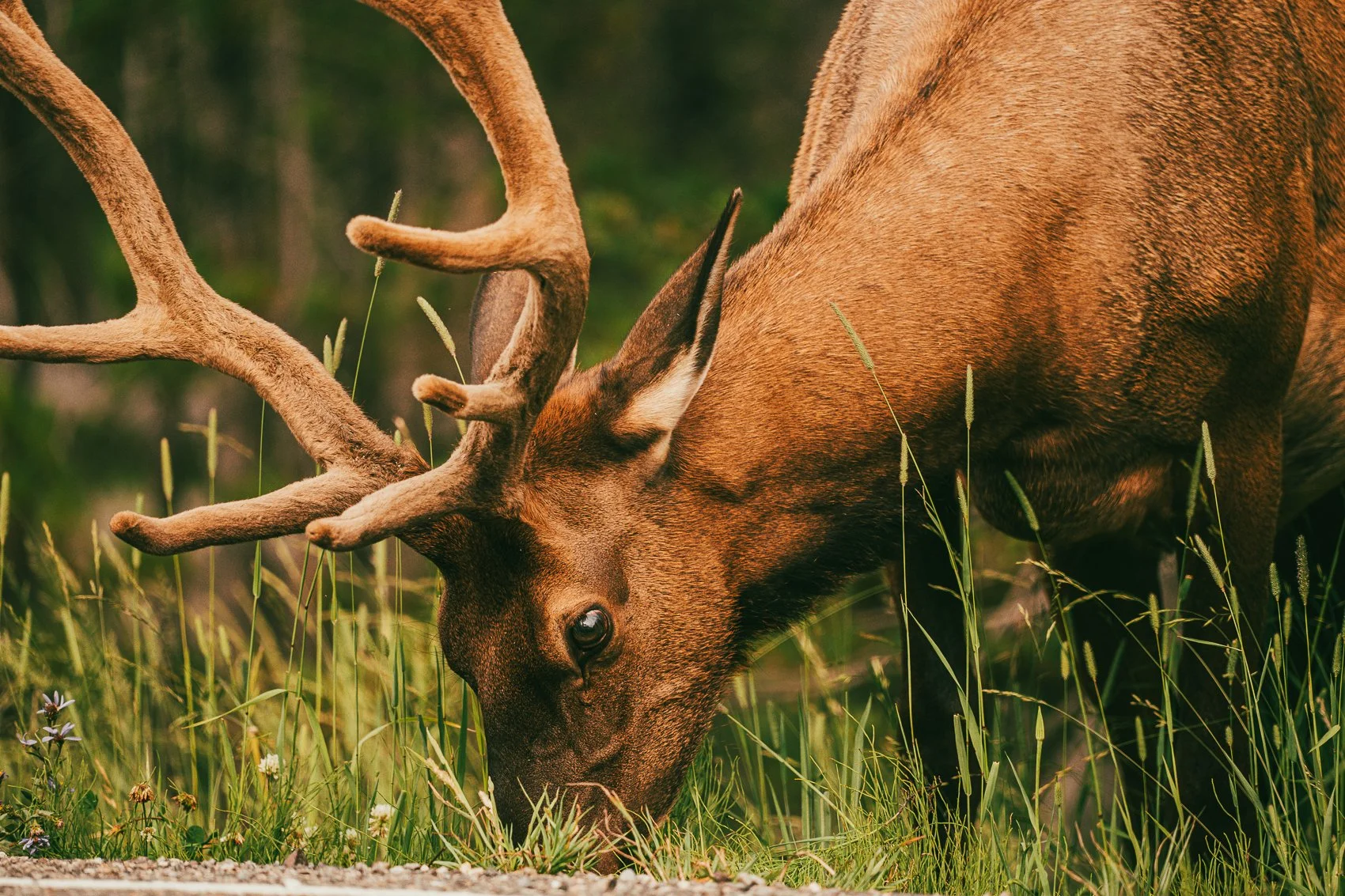
I just got back from a trip through Yellowstone National Park and the surrounding areas, and it reminded me why Yellowstone is one of my favorite places in the country to photograph. There is something different around almost every corner. One minute you're photographing colorful geothermal pools and massive waterfalls, and the next you're watching a bison cross the road or spotting wildlife in the distance.
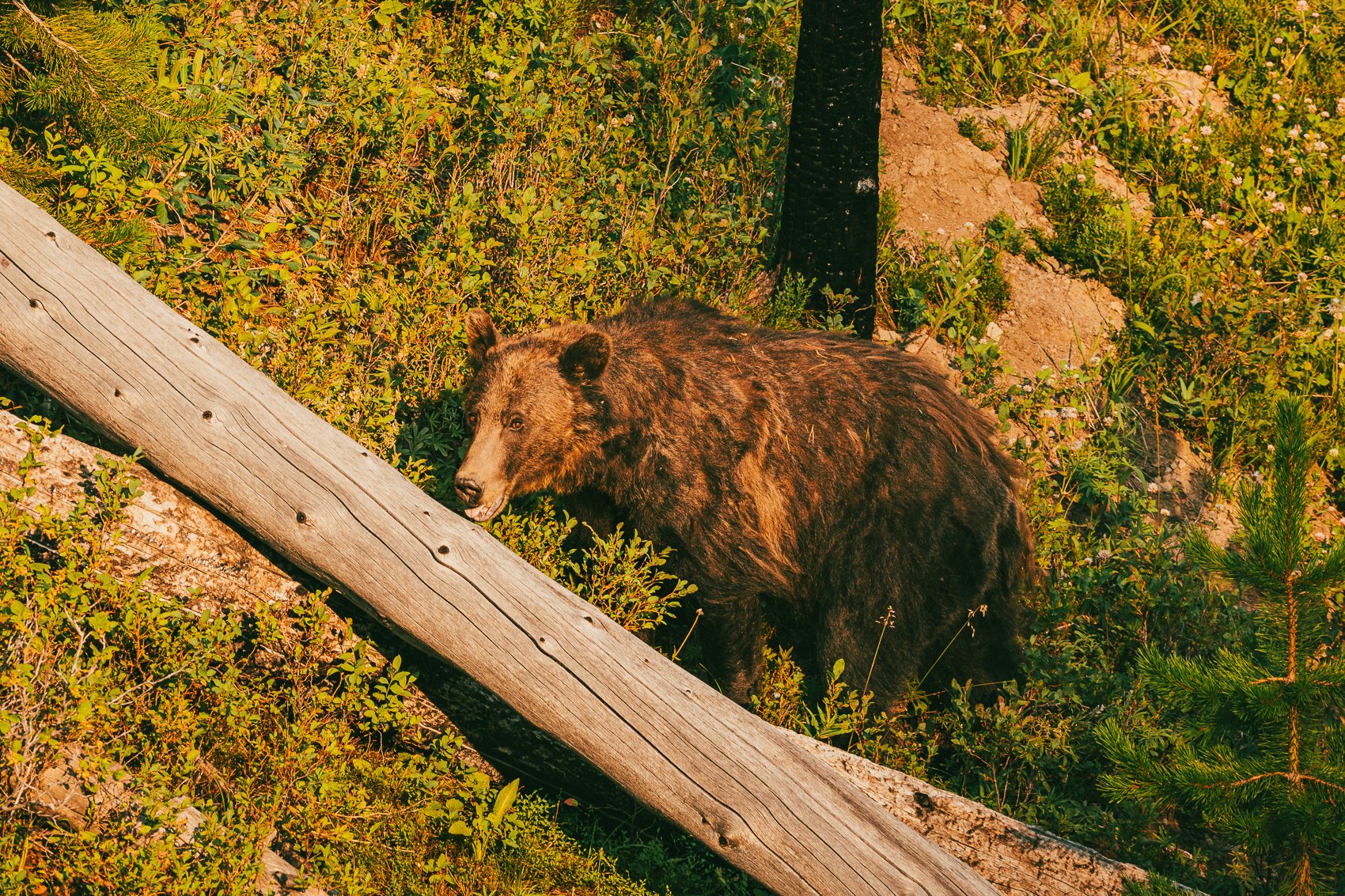
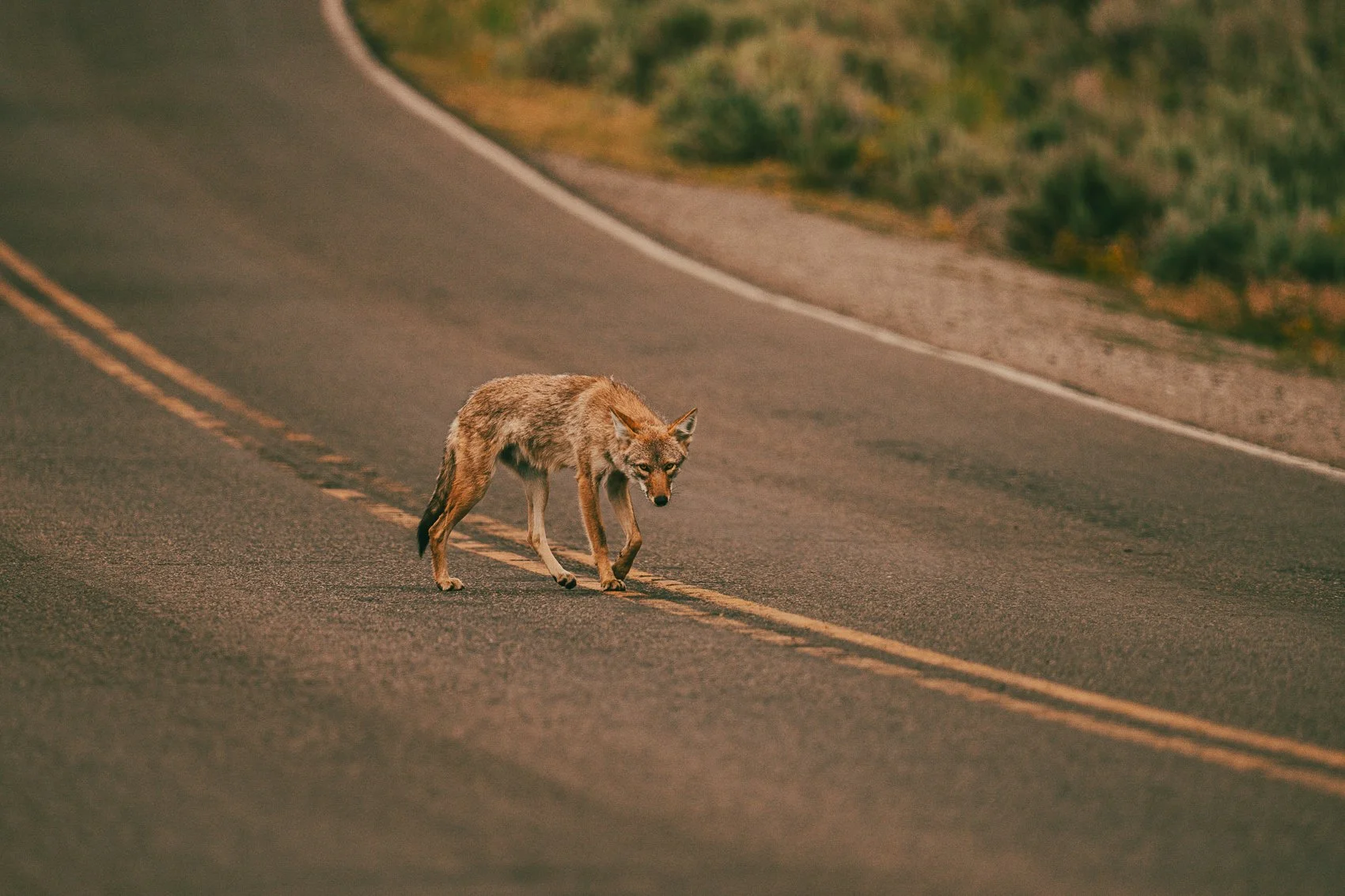
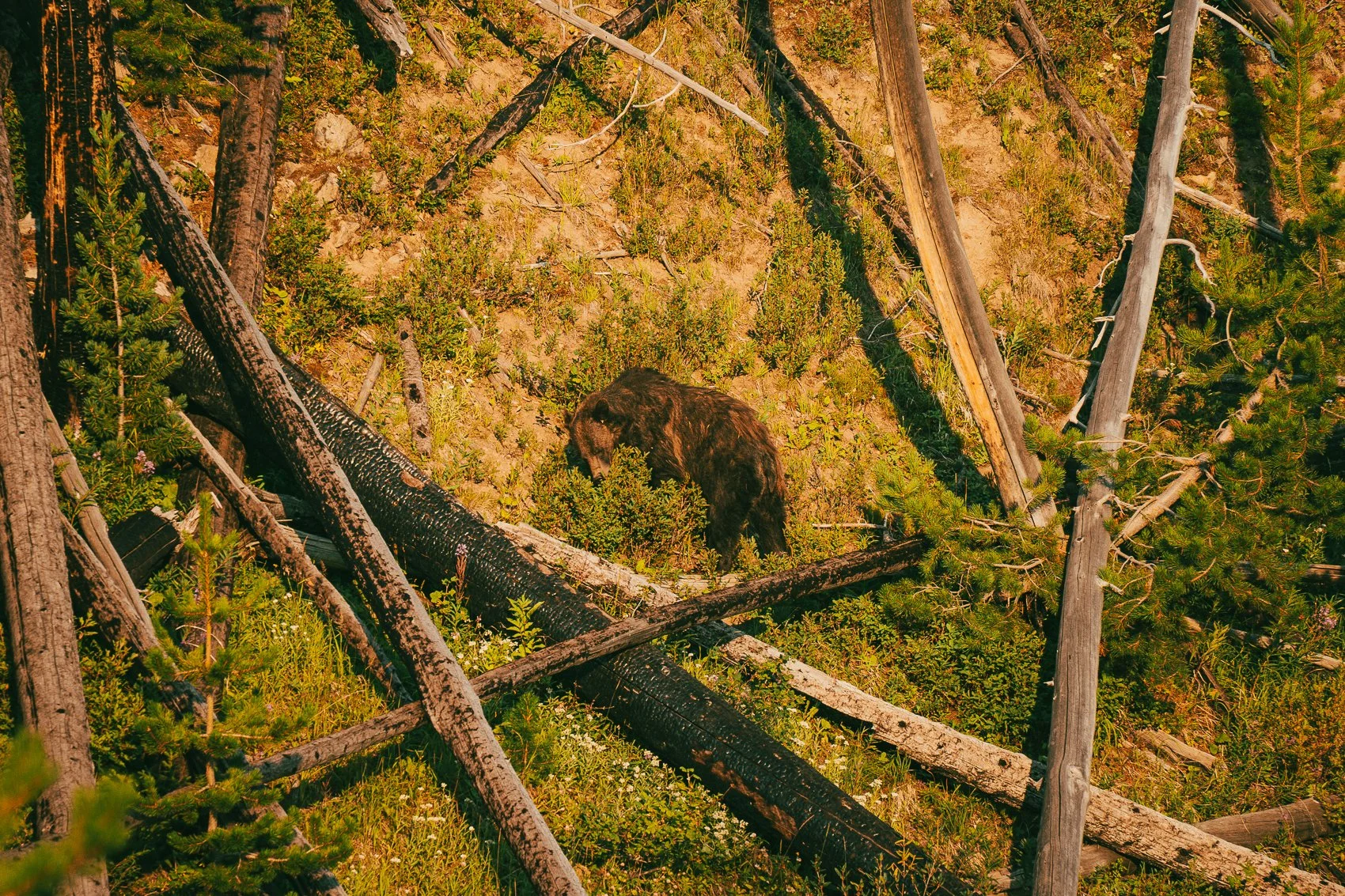
During this trip, I saw a coyote in Lamar Valley, bison throughout the valley, and even a grizzly bear near Yellowstone Lake. Those wildlife encounters were some of the highlights of the trip and were a good reminder that some of the best photography moments are the ones you can't plan.
If you're planning a Yellowstone photography trip, knowing where to go and when to be there can make a huge difference. The light changes quickly, wildlife is most active during certain parts of the day, and popular locations can become crowded. This guide covers some of the best photography locations in Yellowstone, the best times of day to visit them, and some of my favorite tips for getting better landscape and wildlife photos.
Why Yellowstone Is So Good for Photography
Yellowstone National Park is one of the most diverse photography destinations in the United States. The park has everything from colorful hot springs and erupting geysers to waterfalls, deep canyons, alpine lakes, mountains, forests, and abundant wildlife.
That variety means you can spend an entire day photographing completely different subjects without ever leaving the park.
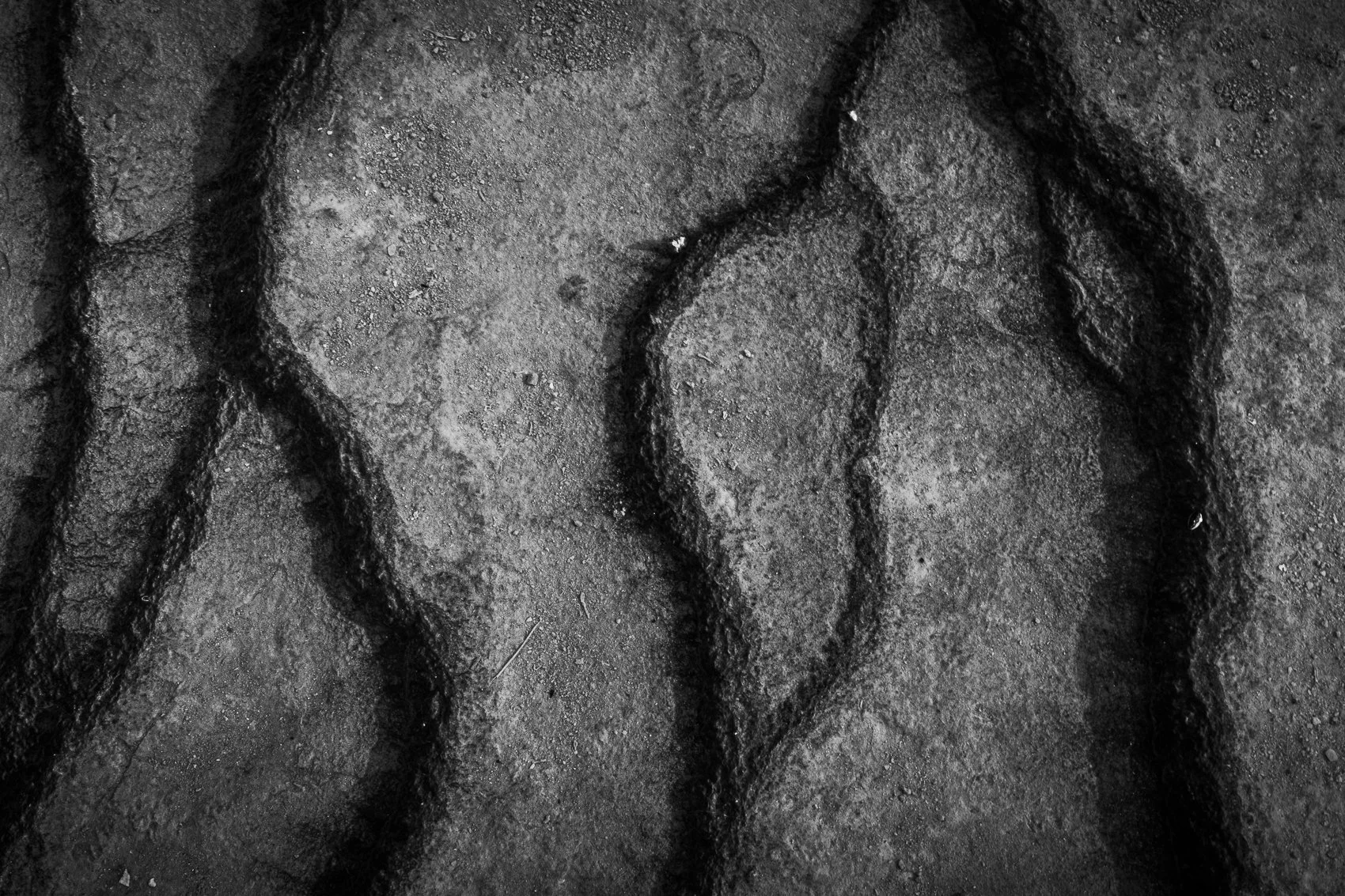
Yellowstone is especially popular for landscape photography and wildlife photography, but it is also an incredible place for nature photography, travel photography, astrophotography, and even abstract photography. The geothermal features alone provide endless opportunities to photograph colors, textures, steam, and unique natural patterns.
The key is giving yourself enough time. Yellowstone is huge, and some of the best photography locations are spread far apart. Planning around sunrise, sunset, wildlife activity, and weather will give you a much better chance of coming home with the images you're looking for.
1. Grand Prismatic Spring
Best time to photograph: Mid-morning to early afternoon
Grand Prismatic Spring is probably one of the most recognizable photography locations in Yellowstone. The bright blue center surrounded by yellow, orange, and red mineral deposits makes it one of the most colorful landscapes in the park.
One thing to keep in mind is that the appearance of Grand Prismatic can change dramatically depending on the weather and temperature. Cooler mornings often produce a large amount of steam, which can partially hide the colors. As the day warms up and the sun gets higher, the steam can clear enough to reveal the incredible colors of the spring.
For that reason, mid-morning through early afternoon can be a great time for photographing the vivid colors from the overlook.
That doesn't mean sunrise isn't worth photographing. If you want a more atmospheric and moody image, early morning can be an excellent choice because of the heavy steam.
Photography Tips
A wide-angle lens is great for showing the scale of Grand Prismatic Spring, while a telephoto lens allows you to isolate individual colors, patterns, and textures.
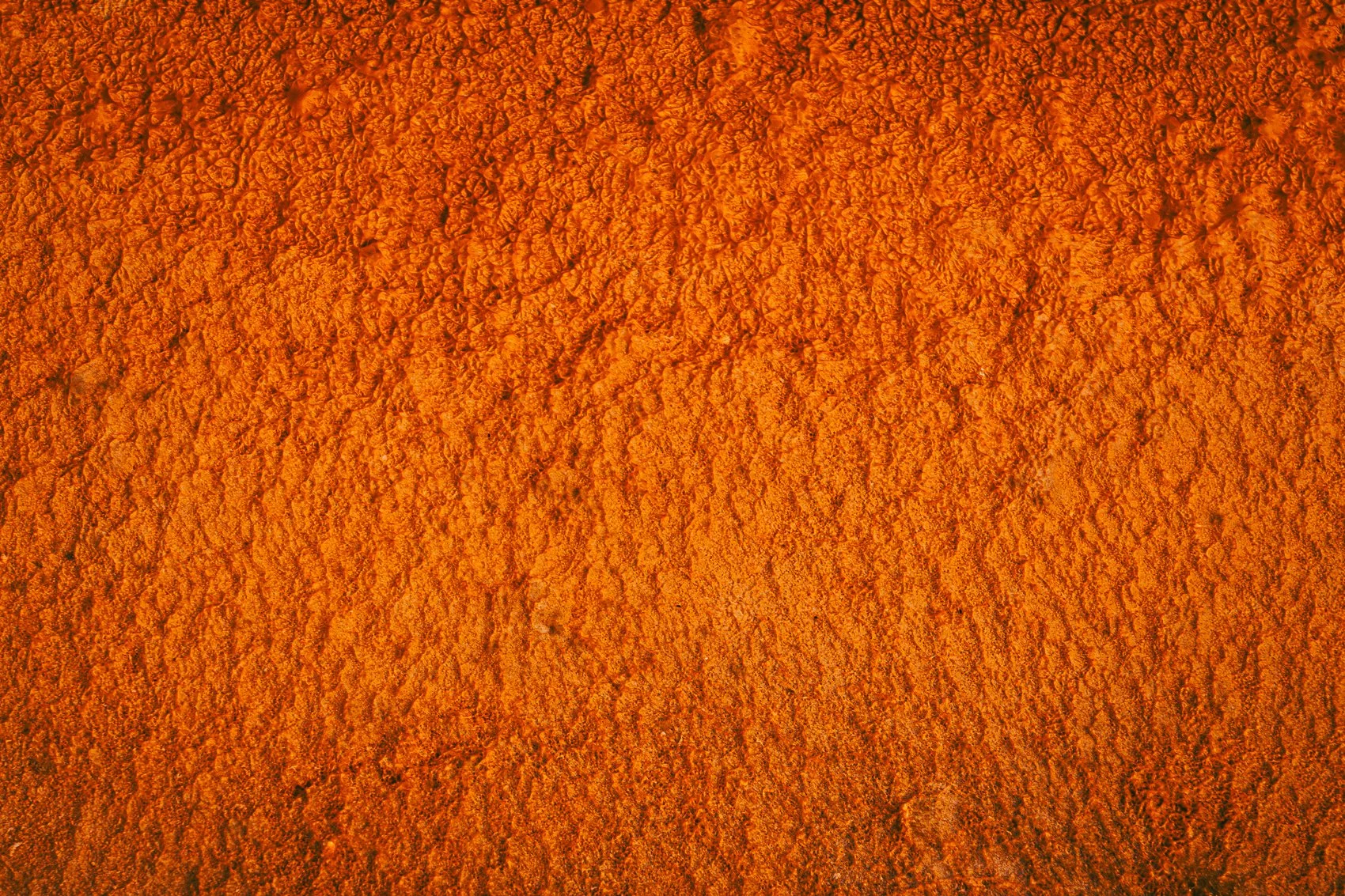
Don't feel like you have to photograph the entire spring. Zooming in on smaller sections can create some really interesting abstract landscape photographs.
Most importantly, stay on the designated boardwalks and trails. Yellowstone's geothermal areas are beautiful, but they can also be extremely dangerous.
2. Grand Canyon of the Yellowstone
Best time to photograph: Early morning or late afternoon
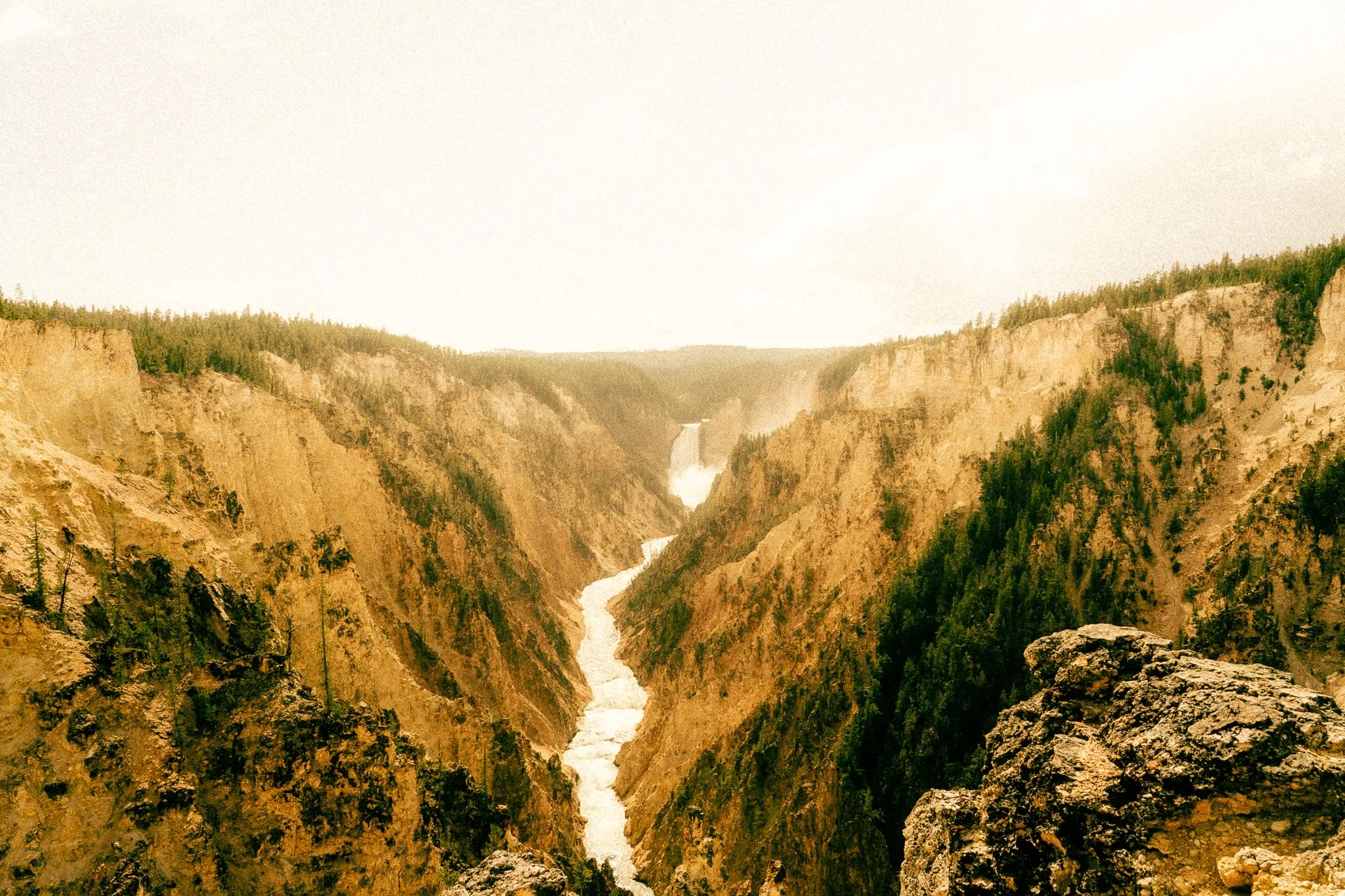
The Grand Canyon of the Yellowstone is one of the most dramatic landscapes in the park. The canyon walls feature incredible shades of yellow, orange, red, and brown, while the Yellowstone River runs through the bottom of the canyon.
The Upper and Lower Falls are some of the most impressive subjects in the area, especially when photographed with the surrounding canyon walls to show their enormous scale.
Early morning is a great time to photograph the canyon because the light is softer and there are generally fewer people. Late afternoon and golden hour can also be excellent because warm sunlight can illuminate the canyon walls.
Artist Point is one of the most famous viewpoints, but there are plenty of other locations along the canyon worth exploring.
Photography Tips
A polarizing filter can help reduce glare and bring out contrast in the rocks and surrounding vegetation.
If you're photographing the waterfalls, experiment with different shutter speeds. A faster shutter speed can freeze the movement of the water, while a longer exposure can give the falls a smoother, more dreamlike appearance.
Try different focal lengths and compositions instead of simply taking the same photo everyone else takes. Sometimes moving a few feet or changing your lens can completely change the image.
3. Lamar Valley
Best time to photograph: Sunrise and early morning
If you're interested in Yellowstone wildlife photography, Lamar Valley should be near the top of your list.
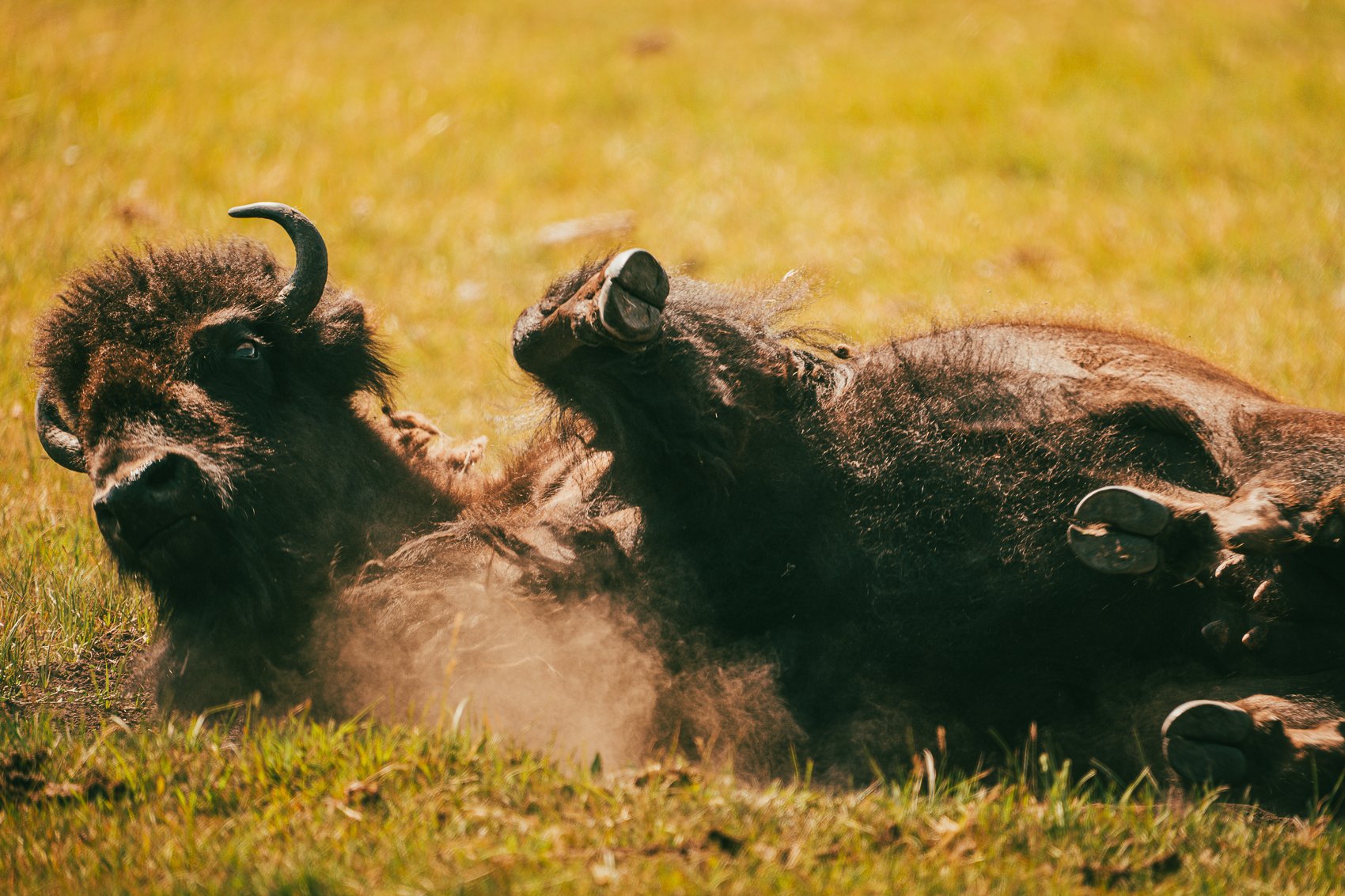
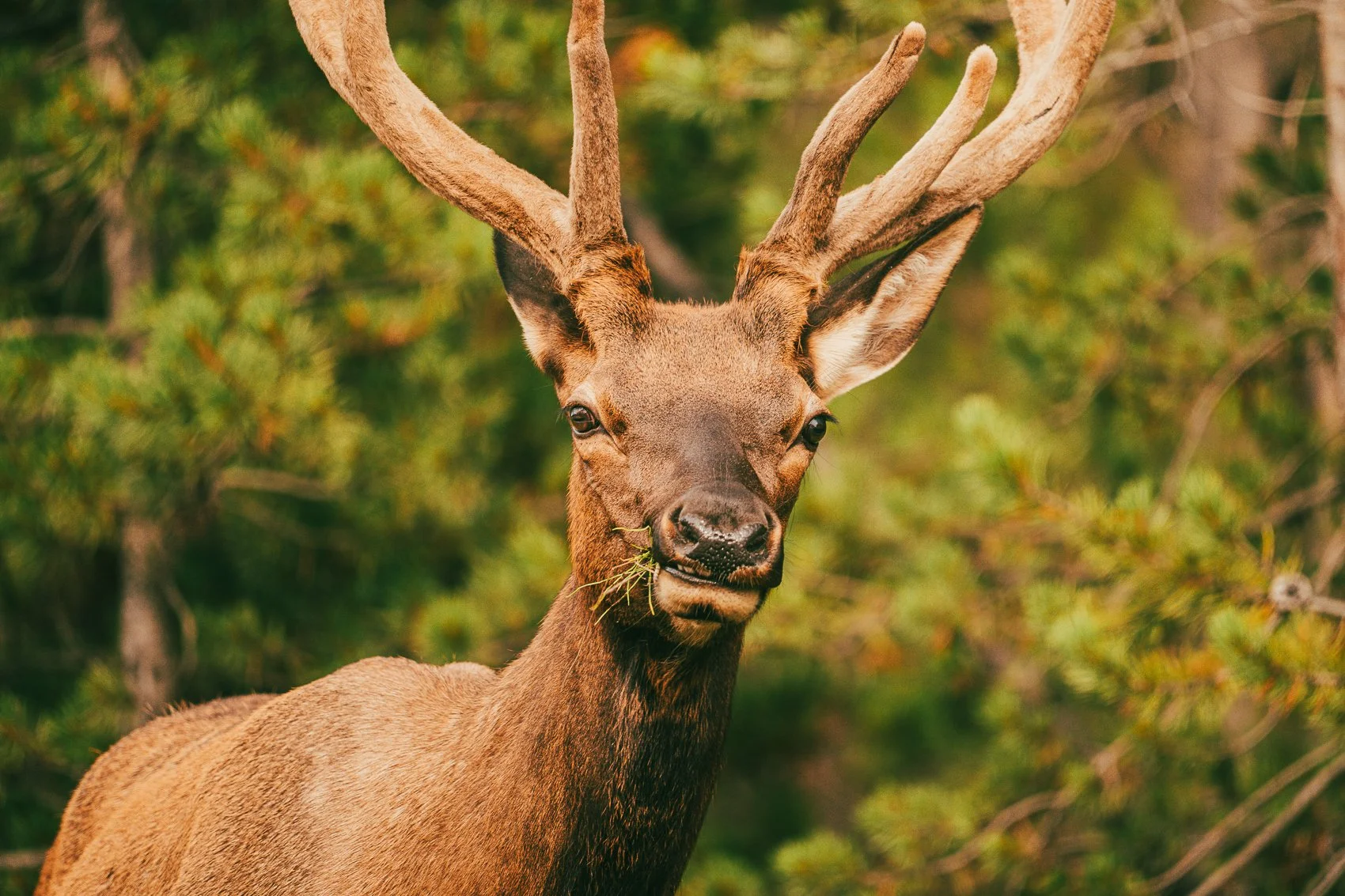
Lamar Valley is one of the best wildlife photography locations in Yellowstone because of its enormous open landscapes and abundance of wildlife. Bison, elk, pronghorn, coyotes, wolves, and other animals can all be found throughout the area.
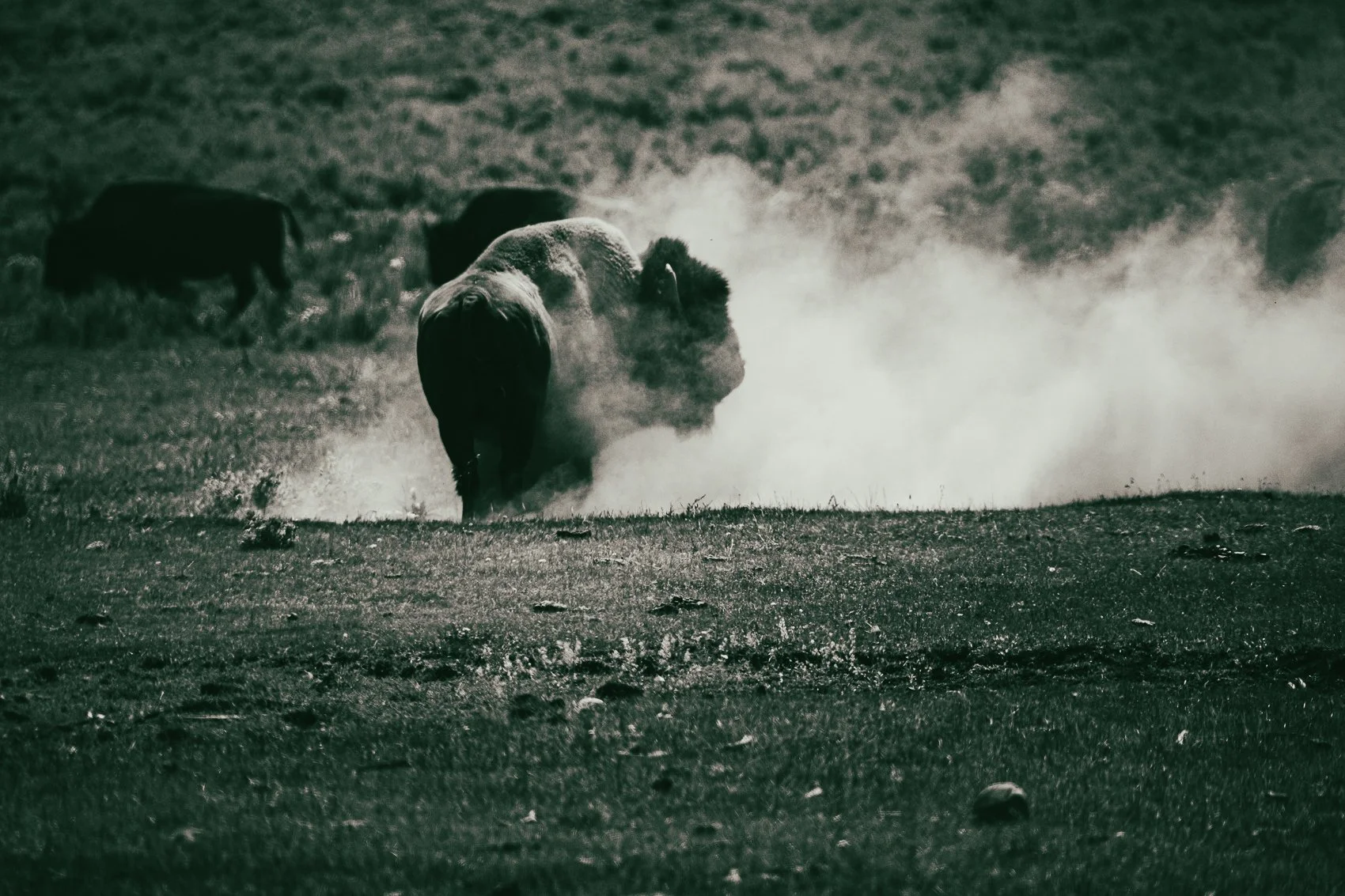
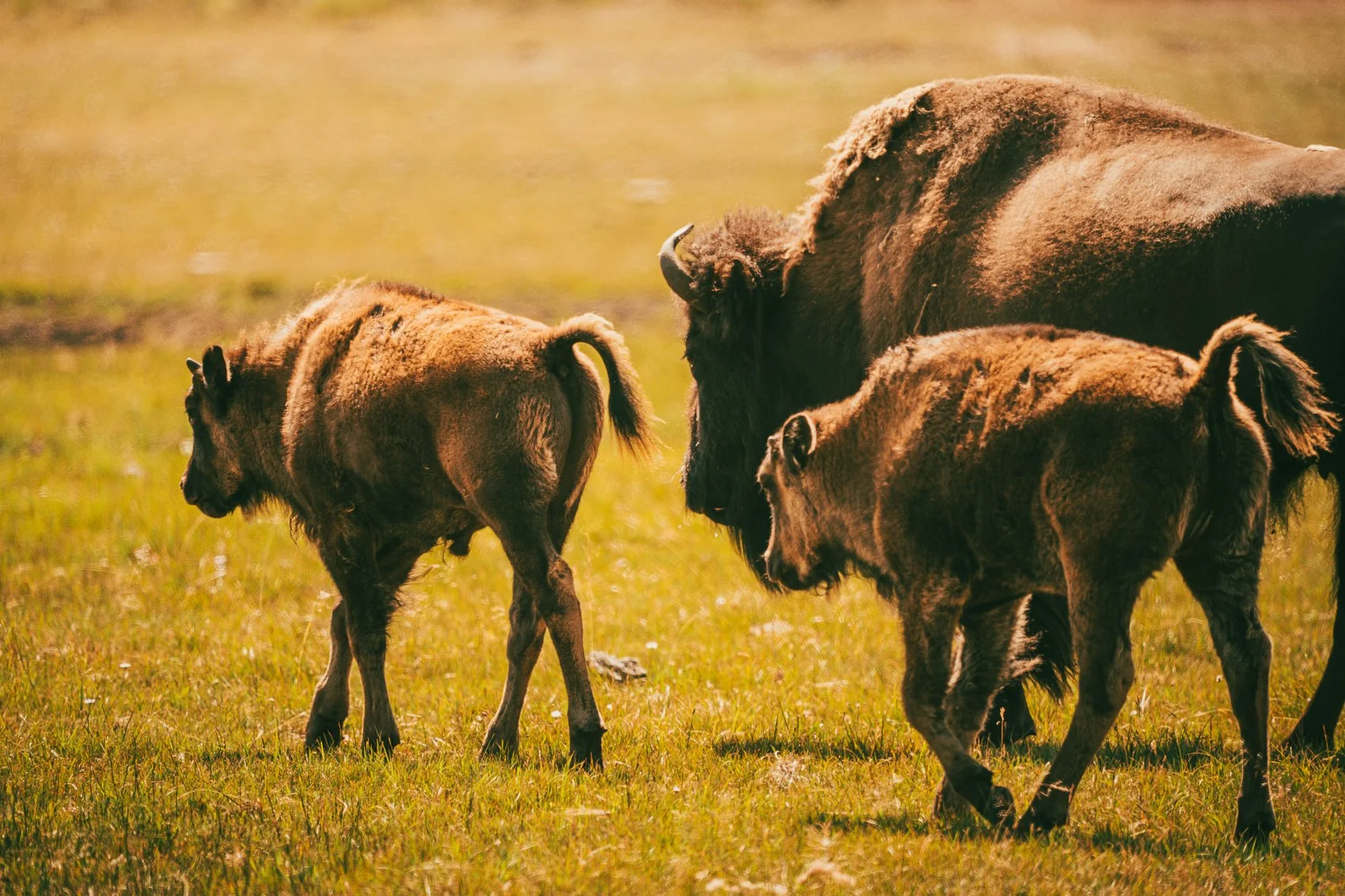
During my recent trip, I saw bison throughout Lamar Valley and came across a coyote moving through the landscape. Watching these animals in such a massive, open environment was one of my favorite parts of the trip.
The valley is also beautiful from a landscape photography perspective. The combination of grasslands, mountains, rivers, and changing light gives you plenty to work with even when wildlife isn't nearby.
Photography Tips
Early morning is one of the best times to visit Lamar Valley. Wildlife tends to be more active during the cooler parts of the day, and the low morning light creates much better conditions for photography.
A telephoto lens is extremely useful for photographing wildlife while maintaining a safe distance. Something in the 200–600mm range can be especially useful.
Don't only look for close-up wildlife portraits. Some of my favorite wildlife photographs are the ones that show the animal within its environment. A bison or coyote surrounded by the massive Yellowstone landscape can tell a much stronger story than a tight crop.
Always maintain a safe distance from wildlife and use your lens to get closer rather than physically approaching the animal.
4. Hayden Valley
Best time to photograph: Sunrise and sunset
Hayden Valley is another excellent location for Yellowstone wildlife photography. Like Lamar Valley, it offers large open landscapes where wildlife can often be seen from a distance.
The valley is particularly beautiful in the early morning when the light is soft and the landscape can have a warm, golden glow.
Bison are commonly seen throughout the area, and you may also encounter elk, bears, wolves, and a variety of birds.
Photography Tips
Bring a telephoto lens and be prepared to wait. Wildlife photography often requires patience, and you never know when an animal will move into the perfect position.
Don't forget to photograph the landscape itself. The mountains and valley can make an excellent background for wildlife photographs and help show the scale of Yellowstone.
5. West Thumb Geyser Basin
Best time to photograph: Sunrise
West Thumb Geyser Basin is one of the most unique photography locations in Yellowstone because its geothermal features sit directly along the edge of Yellowstone Lake.
The combination of colorful hot springs, steam, mountains, and the lake creates compositions that you won't find anywhere else in the park.
Sunrise is one of the best times to photograph West Thumb. On calm mornings, the lake can create beautiful reflections while the rising sun adds color to the sky and surrounding landscape.
Photography Tips
Arrive before sunrise so you have time to find a composition before the light changes.
Try including a geothermal feature in the foreground, Yellowstone Lake in the middle ground, and mountains in the distance. This creates depth and gives the photograph a strong sense of place.
A wide-angle lens works well for larger compositions, while a telephoto lens can be used to compress distant mountains and isolate individual geothermal features.
6. Mammoth Hot Springs
Best time to photograph: Morning or late afternoon
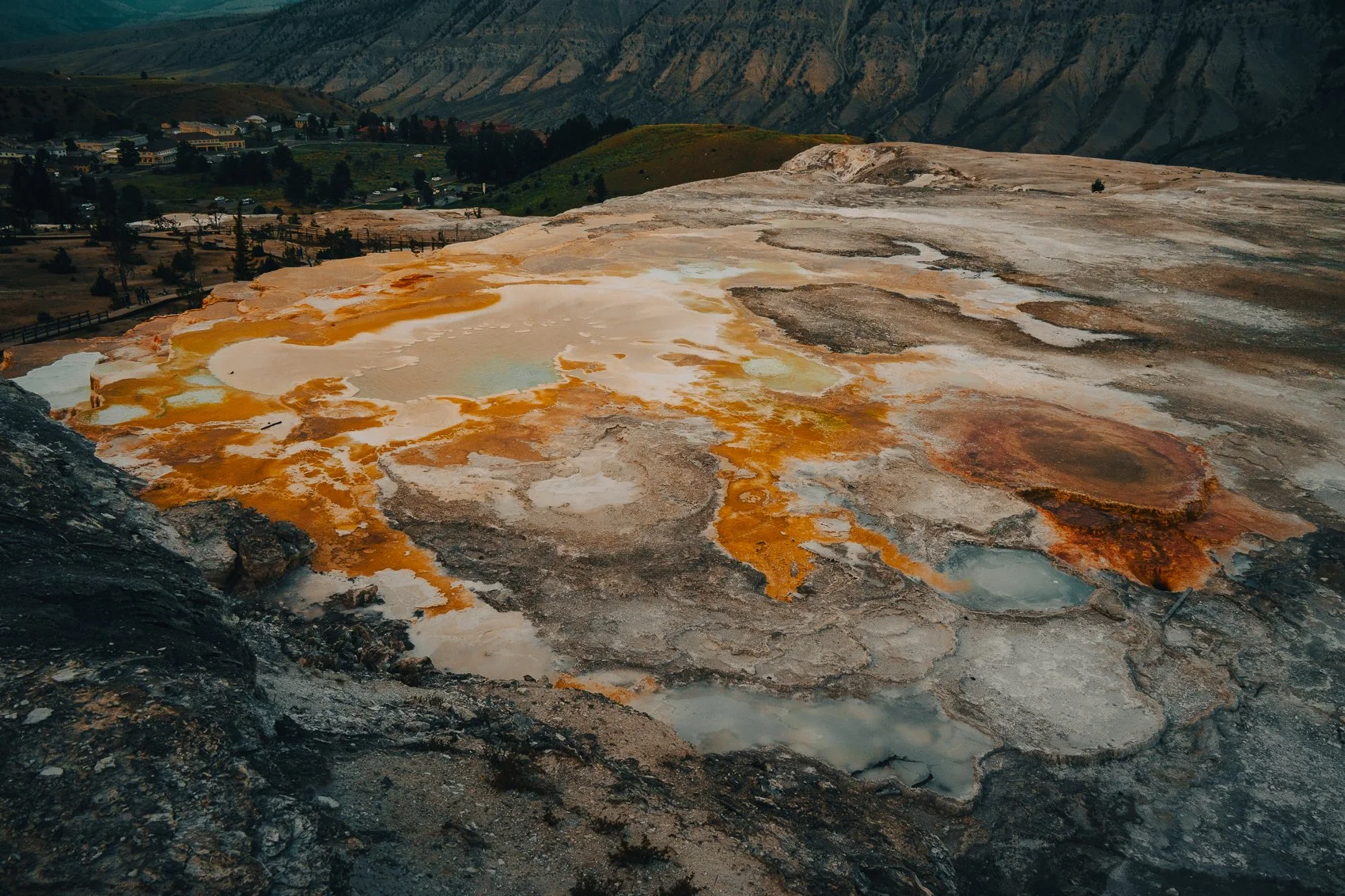
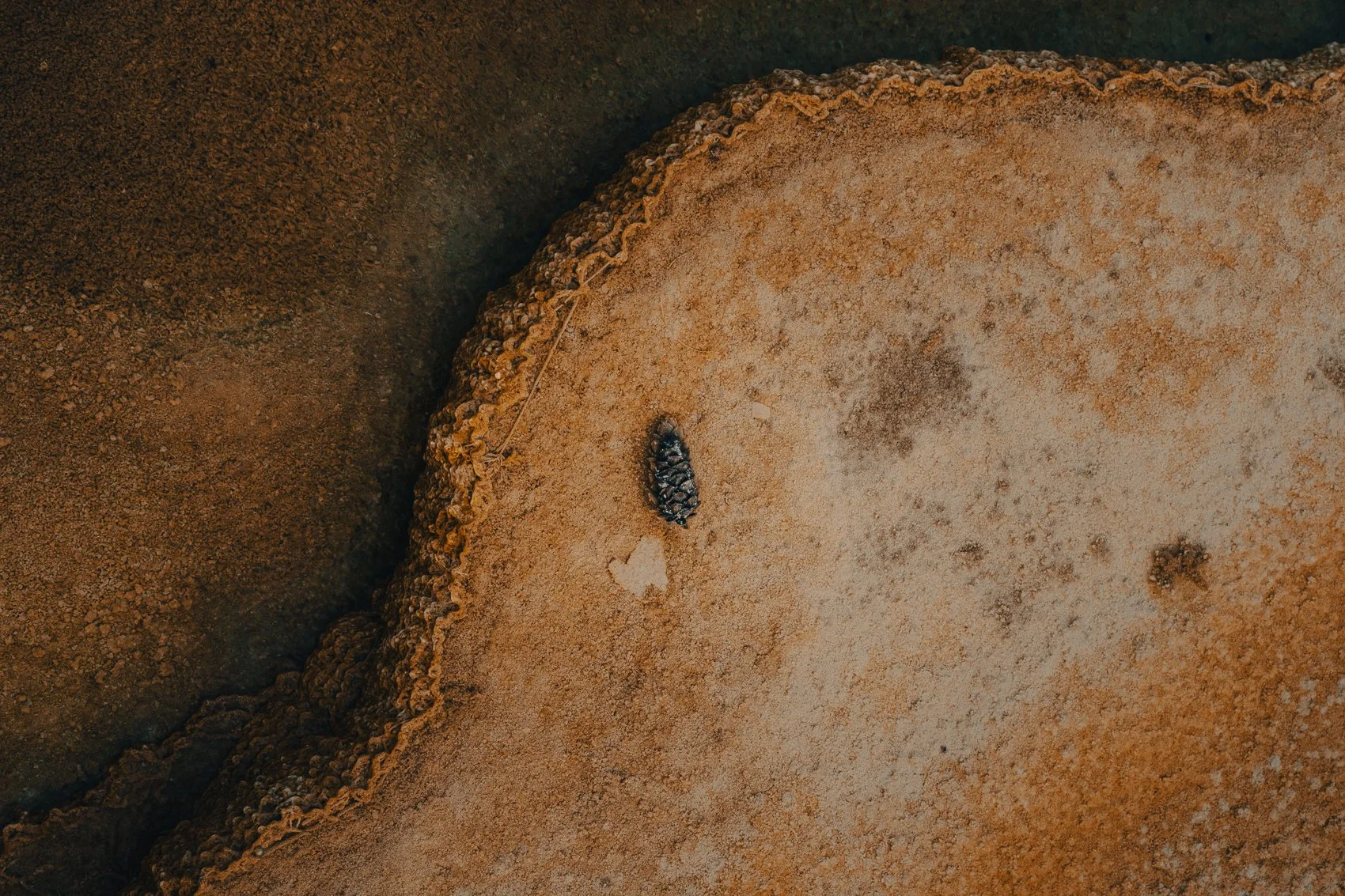
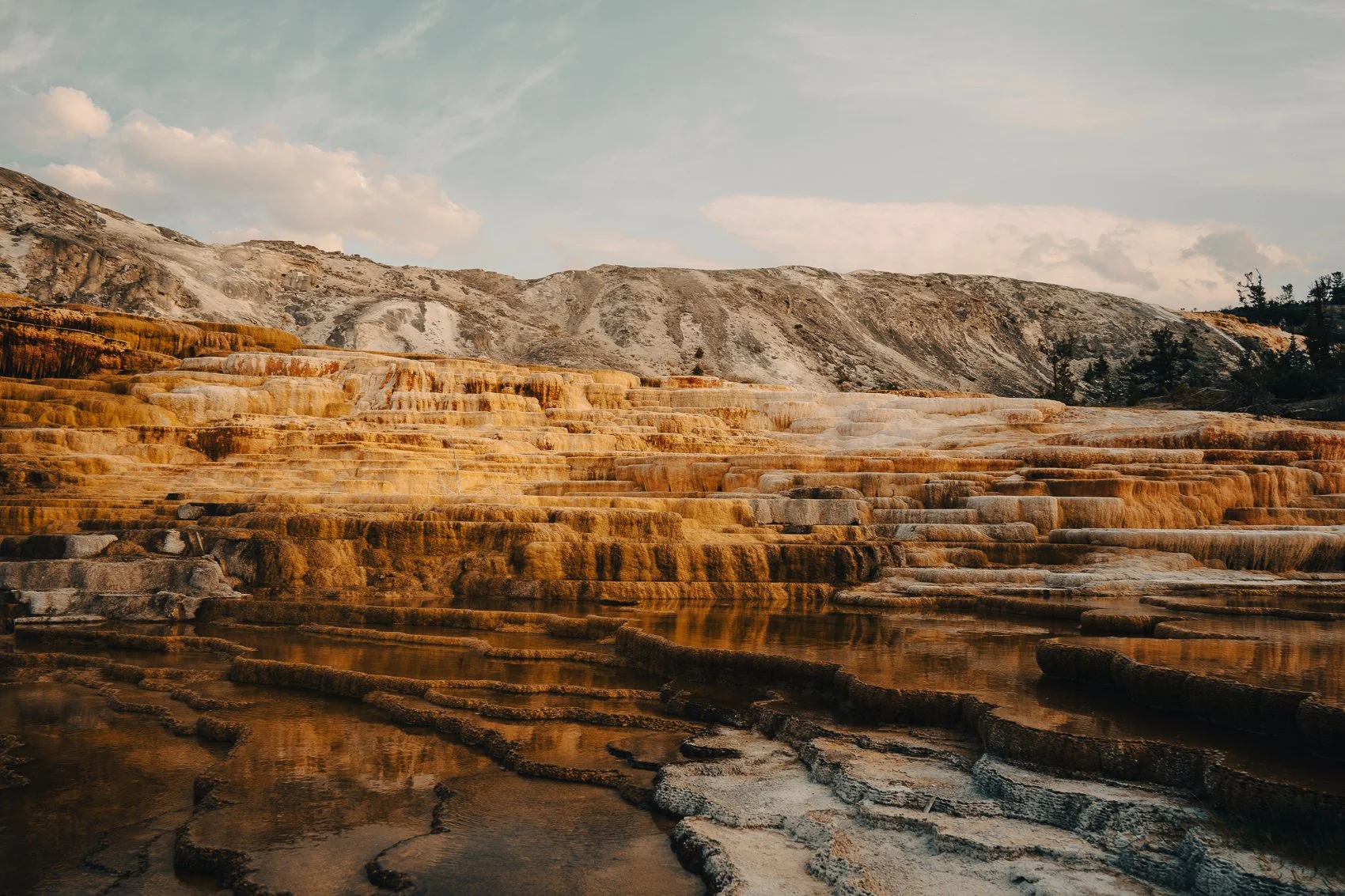
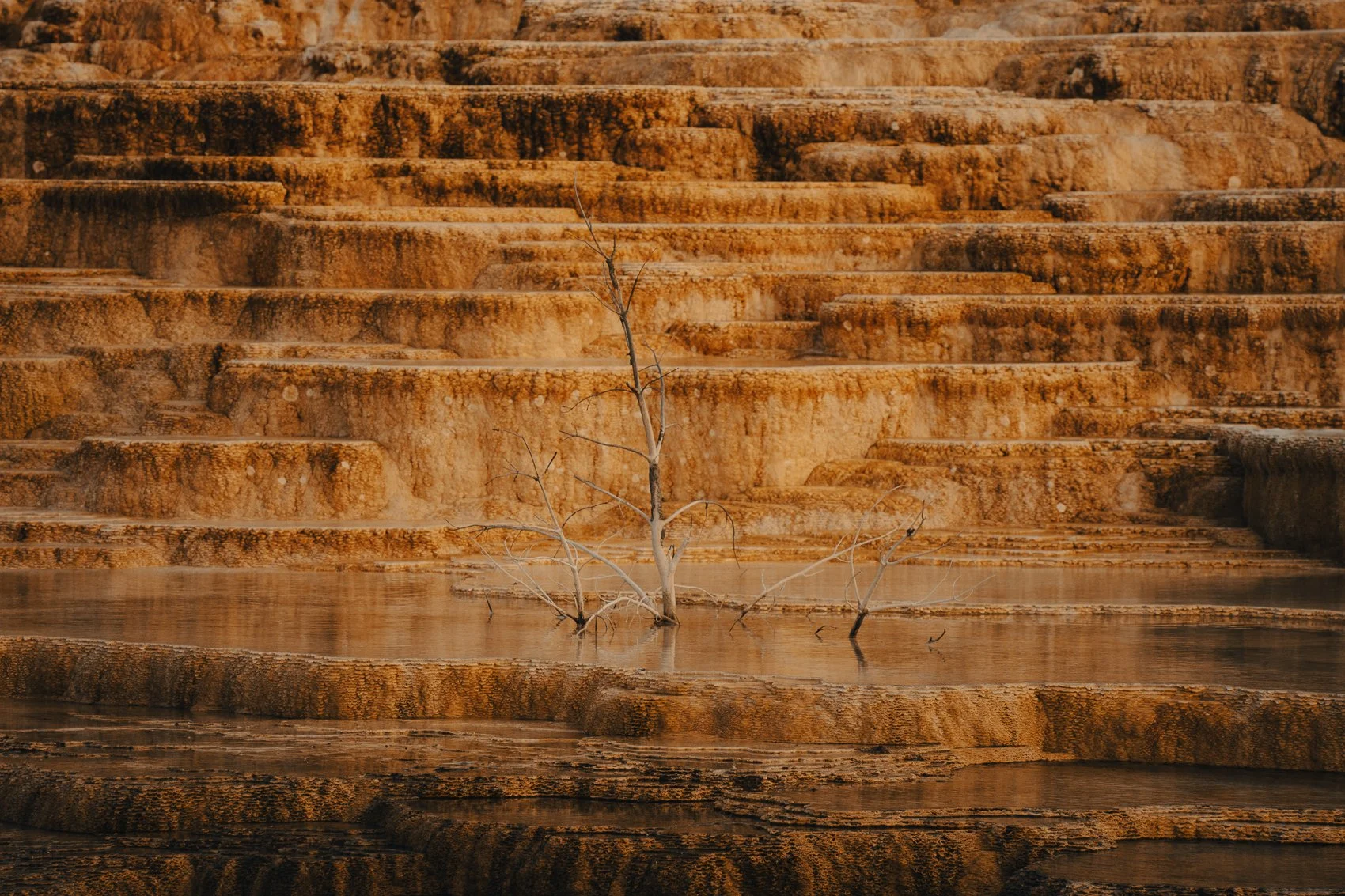
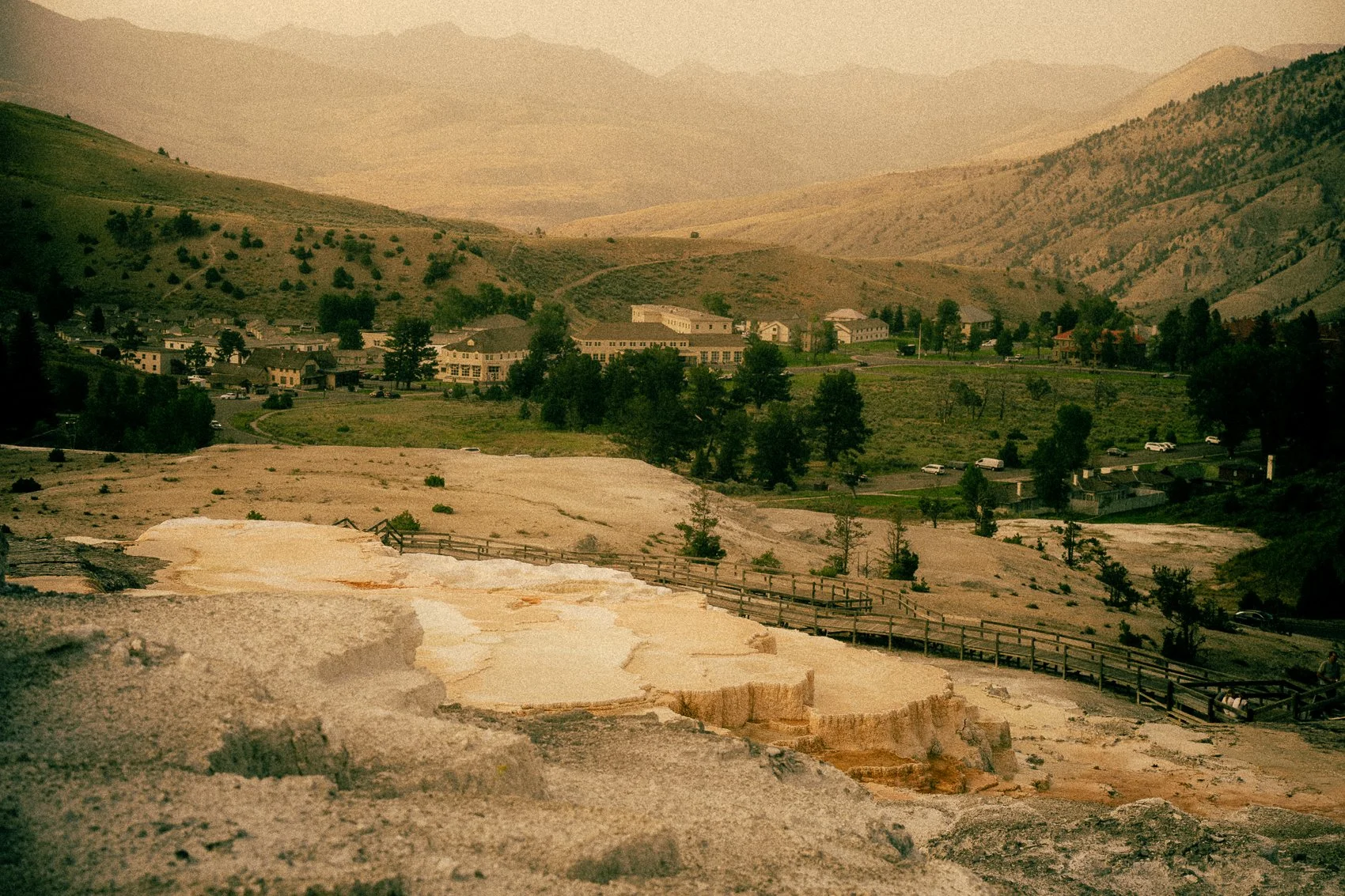
Mammoth Hot Springs is one of the best places in Yellowstone for photographing textures and patterns.
The constantly changing travertine terraces create layers of mineral deposits, flowing water, and unusual shapes. Depending on the lighting, the terraces can look completely different from one visit to the next.
Morning and late afternoon are particularly good because the lower-angle sunlight creates shadows across the terraces, bringing out their texture and depth.
Photography Tips
Instead of always photographing the entire landscape, look for smaller patterns and details.
A telephoto lens can be great for isolating individual terraces, while a smaller aperture such as f/8–f/16 can help keep more of the landscape sharp.
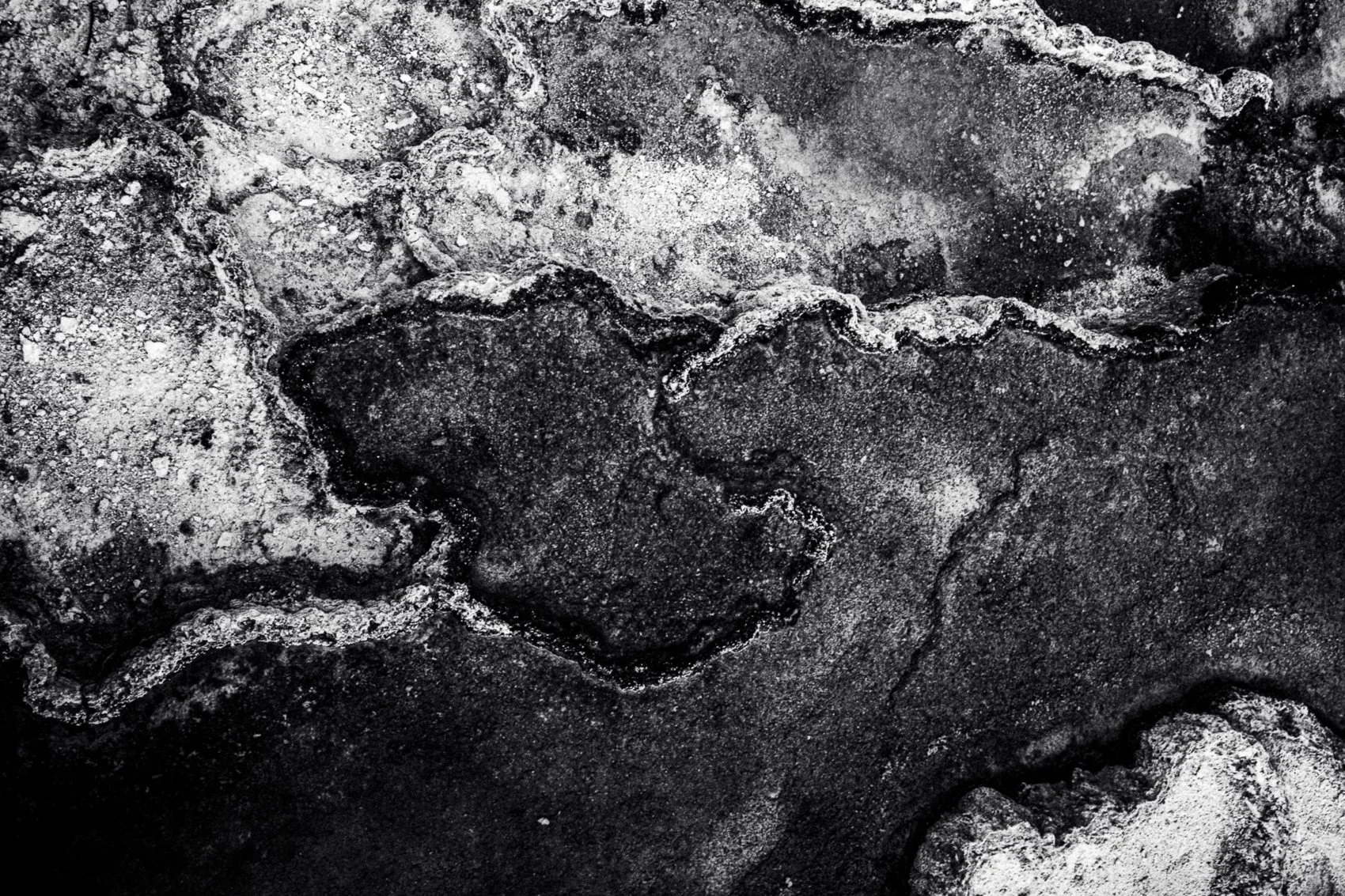
Black and white photography can also work extremely well here because of the strong contrast between the mineral formations, water, and shadows.
7. Yellowstone Lake
Best time to photograph: Sunrise and sunset
Yellowstone Lake is one of the most beautiful landscape photography locations in the park. Its enormous size, surrounding mountains, and constantly changing weather provide endless possibilities.
Sunrise is especially rewarding because the water can be calm enough to create reflections of the surrounding mountains and sky.
During my recent trip, I also had the opportunity to see a grizzly bear near Yellowstone Lake. Seeing a grizzly in the wild was one of the highlights of the trip and made the experience even more memorable. Watching wildlife in such a massive natural landscape is one of the things that makes Yellowstone photography so special.
Photography Tips
Bring a tripod for sunrise and sunset photography, especially if you're planning to use longer exposures.
Look for foreground elements such as rocks, grasses, or driftwood to add depth to your compositions.
Don't worry if the water isn't perfectly calm. Wind can create interesting textures across the lake and can make for a completely different type of landscape photograph.
8. Norris Geyser Basin
Best time to photograph: Early morning or late afternoon
Norris Geyser Basin is one of the most active geothermal areas in Yellowstone and is an incredible place for photographing steam, colorful pools, geysers, and mineral formations.
The constantly moving steam makes this area especially interesting because the scene can change from one minute to the next.
Photography Tips
Take your time and watch how the steam moves before taking your photograph. Waiting for the right amount of steam can completely change the mood of an image.
A telephoto lens is great for isolating small details and colorful geothermal features, while a wide-angle lens can show the scale of the basin.
This is also an excellent location to experiment with black and white photography. The contrast between steam, water, minerals, and surrounding landscape can create dramatic images.
9. Firehole River and Geyser Basins
Best time to photograph: Early morning or late afternoon
The Firehole River and surrounding geyser basins offer a huge variety of photography opportunities. You can photograph rivers, waterfalls, forests, geysers, steam, and geothermal pools all within the same area.
Early morning can be especially atmospheric when cool air mixes with the warmer geothermal water, creating layers of steam across the landscape.
Photography Tips
Use the river as a leading line to draw the viewer's eye through the photograph.
A polarizing filter can help reduce glare on the water and bring out the surrounding colors.
For waterfalls and moving water, try several shutter speeds. A fast shutter can freeze the movement, while a longer exposure can create a smoother appearance.
10. Mount Washburn
Best time to photograph: Sunrise, sunset, or clear days
For photographers looking for huge mountain landscapes, Mount Washburn provides some of the best elevated views in Yellowstone.
From higher elevations, you can see mountains, forests, valleys, and enormous sections of the park. Clear days can provide incredible visibility, while clouds and changing weather can add drama to the landscape.
Photography Tips
A wide-angle lens is ideal for capturing the scale of the landscape, but don't overlook a telephoto lens. A longer lens can compress distant mountains and create beautiful layers.
Always check the weather before heading into higher elevations. Mountain weather can change quickly, and safety should always come before getting a photograph.
The Best Times of Day for Yellowstone Photography
Sunrise
For me, sunrise is one of the best times to photograph Yellowstone. The light is softer, the landscape is usually quieter, and wildlife tends to be more active.
Sunrise is particularly good for Lamar Valley, Hayden Valley, Yellowstone Lake, West Thumb, and mountain landscapes.
If you're willing to wake up early, you can often get some of the best light of the entire day before most visitors arrive.
Midday
Midday isn't always ideal for traditional landscape photography because the sunlight can be harsh, but it can actually be a great time for photographing Yellowstone's geothermal features.
Grand Prismatic Spring is a perfect example. Stronger sunlight can help bring out the incredible colors of the spring.
Midday is also a good opportunity to explore locations and scout compositions for later in the day.
Golden Hour and Sunset
Golden hour can completely transform Yellowstone's landscape. Warm sunlight hitting mountains, canyon walls, forests, and wildlife can create much more depth and color than harsh midday light.
The Grand Canyon of the Yellowstone, Yellowstone Lake, and many of the park's mountain landscapes are particularly good around sunset.
Blue Hour and Night Photography
Don't put your camera away as soon as the sun goes down.
Blue hour can produce beautiful cool tones across Yellowstone's landscapes, and clear nights can provide opportunities for astrophotography and Milky Way photography.
Because Yellowstone is far from major cities, many areas have relatively dark skies, making it an incredible destination for night photography.
What Camera Gear Should You Bring to Yellowstone?
You don't need a massive collection of camera equipment to photograph Yellowstone, but a versatile setup can make a big difference.
A wide-angle lens is ideal for landscapes, waterfalls, geothermal features, and dramatic skies.
A standard or mid-range zoom is useful for general travel photography and everyday scenes.
A telephoto lens is one of the most valuable pieces of equipment for Yellowstone wildlife photography. It allows you to photograph animals from a safe distance while still filling the frame.
A tripod is also extremely useful for sunrise photography, sunset photography, long exposures, and astrophotography.
Most importantly, don't let equipment keep you from taking photographs. Good light, composition, patience, and timing will usually matter more than having the newest camera or most expensive lens.
Yellowstone Photography Tips
Plan Around the Light
The same location can look completely different depending on the time of day. Before visiting a photography location, think about where the sun will be and how the light will interact with the landscape.
Watch the Weather
Don't automatically avoid cloudy or stormy weather. Some of the most dramatic Yellowstone photographs can happen when clouds, rain, fog, or snow move through the landscape.
Changing weather can create short windows of incredible light, so keep your camera ready.
Be Patient
Photography in Yellowstone often rewards patience.
You might wait for a few minutes for steam to move out of the way, an hour for the light to change, or much longer for wildlife to appear.
Don't rush from location to location just because you aren't immediately getting the photograph you imagined.
Give Wildlife Plenty of Space
This is especially important when photographing bison, bears, coyotes, wolves, and other Yellowstone wildlife.
During my trip, seeing a coyote in Lamar Valley, bison throughout the valley, and a grizzly near Yellowstone Lake were incredible experiences. But the best way to photograph wildlife is to let the animals behave naturally and observe them from a safe distance.
A longer lens allows you to capture incredible wildlife photographs without putting yourself or the animal in danger.
Stay on Designated Trails
Yellowstone's geothermal features may look inviting, but they can be extremely dangerous. Always stay on designated boardwalks and trails and follow park regulations.
Protecting Yellowstone also means protecting the landscapes and wildlife that make it such an incredible photography destination.
Final Thoughts
After just getting back from my latest trip, Yellowstone has once again proven to me why it is one of the best photography destinations in the American West.
There is so much more to Yellowstone photography than the famous locations you see online. The Grand Prismatic Spring and Grand Canyon of the Yellowstone are incredible, but some of my favorite moments from this trip came from simply driving through the park and seeing wildlife in its natural environment.
Watching bison throughout Lamar Valley, seeing a coyote moving through the valley, and spotting a grizzly bear near Yellowstone Lake were experiences that I won't forget.
If you're planning your own Yellowstone photography trip, give yourself plenty of time, wake up early for the best light, keep an eye on the weather, and always be ready for unexpected wildlife encounters.
You can plan your entire photography itinerary, but Yellowstone will almost always give you something you weren't expecting.
And honestly, those unexpected moments are often the photographs and memories that end up meaning the most.